Detachment; sounds like another jargon word, doesn’t it?? Think about this word for a few minutes and jot down what you think about it.
Detachment is a very hard concept to grasp when we think about what needs to be done in order to fully detach from the object or person of our obsession. Yes, I said obsession. Think about it, it’s the whole reason we are so crazy about something or someone. We literally can not breathe without the need for control over the obsessions’ influence in our lives. This obsession can literally hinder the very nature of who we are and change us into someone we don’t even recognize in the mirror. It makes us be someone we promised ourselves we would never ever be. But how will we know if we have an obsession to detach from? Well, let’s do some work 1st before we move on to how to know the and the steps we can take.
Detachment doesn’t mean not caring it’s taking care of yourself first and letting others take responsibility for their actions without trying to save or punish them. -Unknown
Work:
Grab a journal or notebook and jot a few ideas down, this will help later in other blogs as you reflect or even come back to when time has passed and you want to look back at the changes life brings, because let’s face it, time changes things.
Think of someone or something you literally think you can not live without. What does your life look like with said someone or something?? Jot these ideas down. What would your life look like WITHOUT these things? Jot those ideas down as well.
Listed below are the typical “symptoms” of detachment. Everyone is different so each “symptom” will be different and vary in how much it affects each person.
- Fear
- Ridgid thinking/Worrying
- Anxiety
- Depression
- Loss of control
- Hopelessness
But arent these things we deal with anyway because of the control we think we have on our obsession?
Detachment is hard because we let go of our control, let things happen and allow our obsession to have a life of its own. It feels a lot like giving up, but it’s actually healthy in so many ways. It is more emotional and mental work than it is physical, so I will relate the best advice I can.
****Remember, this isn’t a self-help blog, these are shared personal experiences that I went through. Each person has their own ways, and my ways may not be what helps you. I encourage you to take some time to think and feel your obsession and find your way to healthily detach.****
Steps to Emotional Detachment:
- Acknowledge the attachment
- Think and feel the emotions as they come when learning to detach
- Take your time
- Restart or Recycle when needed
Detachment is a healthy tool to learn when we are wanting to let go of an attachment we have. There is no timeline to tell how long it will take to detach, but taking your time and setting boundaries will help ground you on your journey. It’s okay to breathe, to take some time away to paise, and to not be the best you sometimes, just don’t get stuck there. We do not have to have all the answers tomorrow, but we can know that it’s okay to not be okay on the hard days. Think and feel those emotions and then move on, keep going. This is also where you learn that mistakes aren’t life sentences and that you are human. It’s okay to mess up, it’s okay to make the wrong call, life doesn’t come with a handbook, so give yourself some grace!
True detachment isn’t the separation from life but the absolute freedom within your mind to explore living. -Ron Rathbun
When I started to detach, I was a chaotic disaster. I didn’t know where to start, but I knew I had to change. Some days I felt like a fish out of water or a flailing lunatic on other days. The emotional pain that I was feeling, was deafening to me. How in the world did I end up here? When does the roller coaster end?
i started the long journey walking laps around my home during the “COVID year.” What a perfect timing to set things straight. Some days it was 3 miles, other days it was 18 miles. I placed my emotions in specific areas of my life, from childhood to adulthood, and came to terms with things I couldn’t change, and there were A LOT of terms. Terms included were an unloved child, a people pleaser, trauma in many forms, narcissist abuse both mental and emotional, and 2 failed marriages. Yes, I tried controlling all these areas and had very unhealthy attachments to every one, because a need wasn’t met and I needed healing. Each area competed for 1st place in my mind because I hadn’t placed any of them to rest, which caused me to be the chaotic disaster I had become the entirety of my adult life; until I found a healthy way out. I would work on whichever one weighed the heaviest, and for about 6 months I would walk, think, and feel. When I felt better, I put away my book, WRONG MISTAKE. Healing is a way of and needs to be used often so that we aren’t caught up in the snares and thinking a red flag is something we can change in someone, or worse, get attached and thinking we can change them.
2 years into codependent recovery and I can tell you, detaching it gets better, it’s freeing, and it’s absolutely beautiful to love life and let it happen versus trying to control it and let it consume you! There is so much more to life than the mundane. Progress is progress no matter how miniscule it may seem. Take notes, record your feelings and emotions, write down goals and relish in the small victories because better days are coming! There is power in knowing you can heal! Know your limits and know your worth.
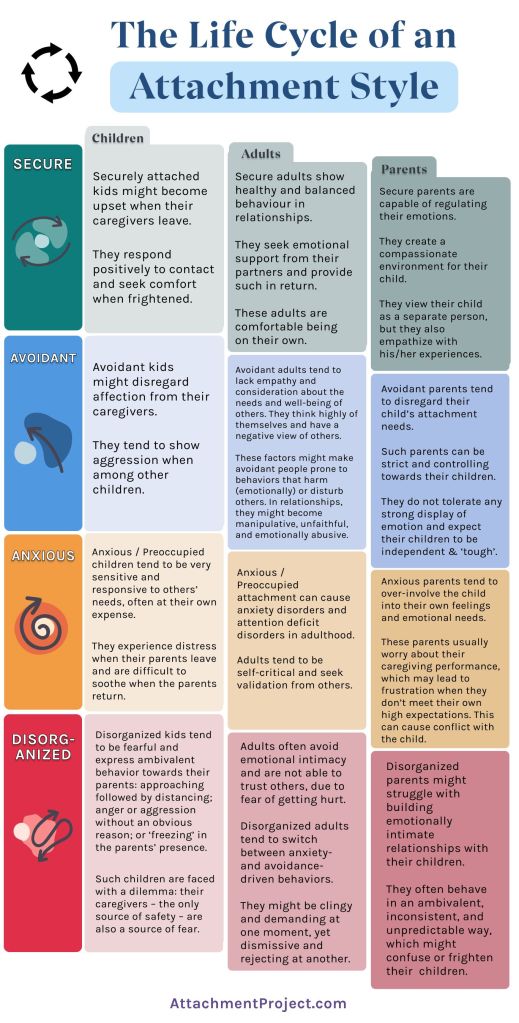
****I have added a photo of the 4 basic attachment styles to help identify yours and how it stems from our childhood into our adulthood***

 Healing-Advice